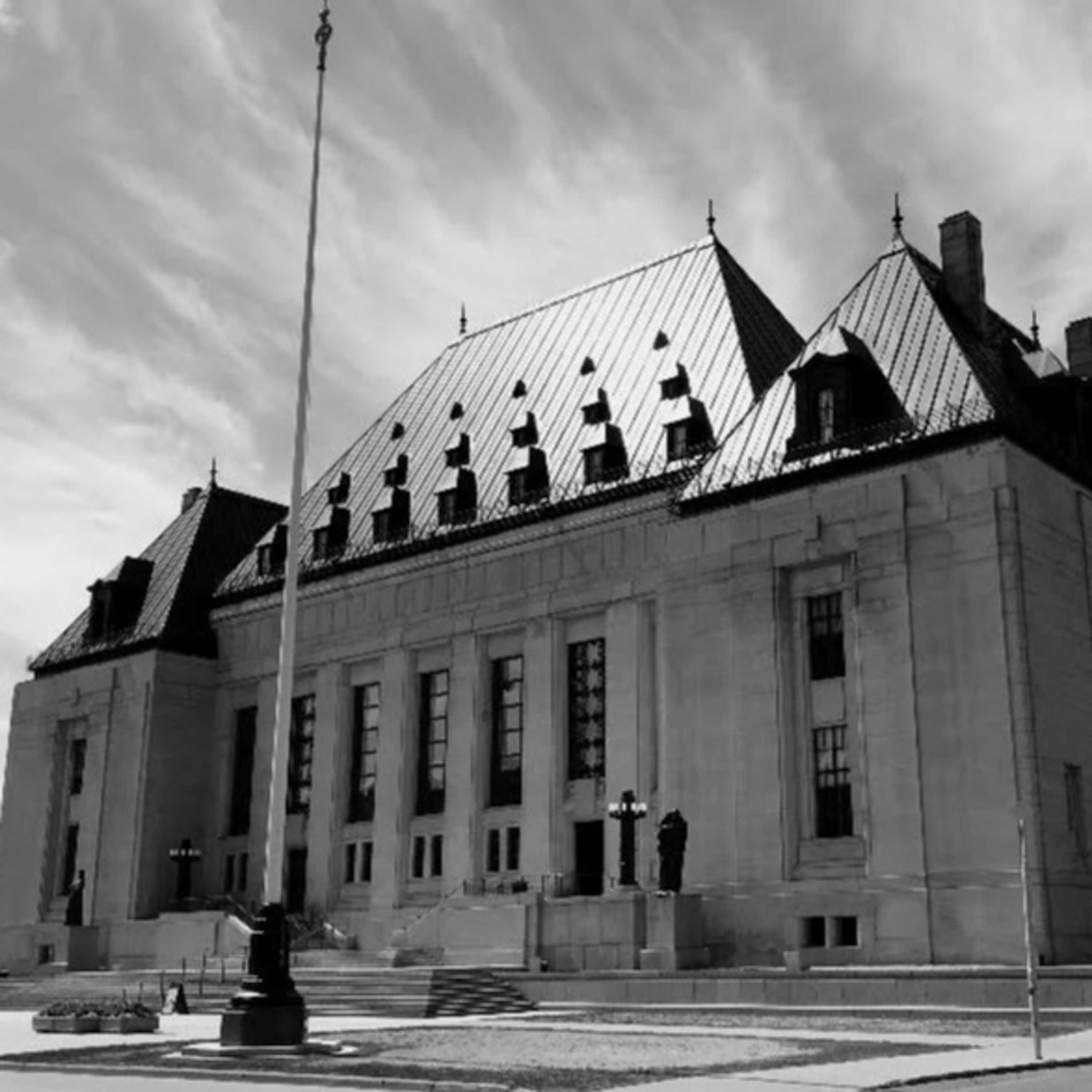
Dayton Kelly v. His Majesty the King (42050)
One evening in October 2021, the applicant was driving in rural southwestern Ontario. The sun had set and it was dark. The posted speed limit on the highway the applicant was using was 80km/h; he was travelling at least 116km/h. A horse-drawn buggy entered the roadway at an intersection. The applicant did not see the buggy in time to stop; his vehicle collided with it. Both occupants of the buggy died from injuries sustained in the collision. During the police investigation that night, the applicant admitted to being a chronic marijuana smoker and consented to providing two samples of his blood. Evidence established that the applicant’s blood drug concentration (“BDC”) exceeded the prescribed limit at the time of the collision. The parties agreed at trial that there was no evidence of a causal nexus between the applicant’s BDC and the collision. The applicant was charged with operating a conveyance with an excess BDC under s. 320.14(1)(c), two counts of committing an offence under s. 320.14(1)(c) causing death under s. 320.14(3), and two counts of dangerous operation of a conveyance causing death under s. 320.13(3).The trial judge held that it is insufficient that the applicant had a prohibited BDC and was operating a conveyance at the time he caused a death; a conviction for offences under s. 320.14(3) requires a causal nexus between an accused’s BDC and the death of a victim. As the parties have agreed that there is no causal nexus between the applicant’s BDC and the death of the victims, the applicant was acquitted on those counts.The Court of Appeal held that the trial judge erred in his interpretation of s. 320.14(3). A plain reading establishes that the elements are made out simply by operating a vehicle with excess BDC, and causing the death of a person. No causal nexus between the excess BDC and the cause of death is required. Accused persons retain the benefit of the basic legal causation standard: the Crown must prove that the applicant’s actions were a significant contributing cause of death. Because of the trial judge’s erroneous interpretation of s. 320.14(3), he did not make any finding as to whether the Crown had proven legal causation on this standard. The Court of Appeal therefore ordered a new trial on these counts.
Argued Date
2026-03-17
Keywords
Criminal law — Causing death while operating conveyance with excess blood drug concentration — Causation — Whether causal nexus required between blood drug concentration and death of victim — Constitutional law — Charter of Rights — Right to life, liberty and security of person — Whether s. 320.14(3) of the Criminal Code violates s. 7 of the Charter — Criminal Code, R.S.C. 1985, c. C-46, s. 320.14(3)
Notes
(Ontario) (Criminal) (By Leave)
Language
English Audio
Disclaimers
This podcast is created as a public service to promote public access and awareness of the workings of Canada's highest court. It is not affiliated with or endorsed by the Court. The original version of this hearing may be found on the Supreme Court of Canada's website. The above case summary was prepared by the Office of the Registrar of the Supreme Court of Canada (Law Branch).