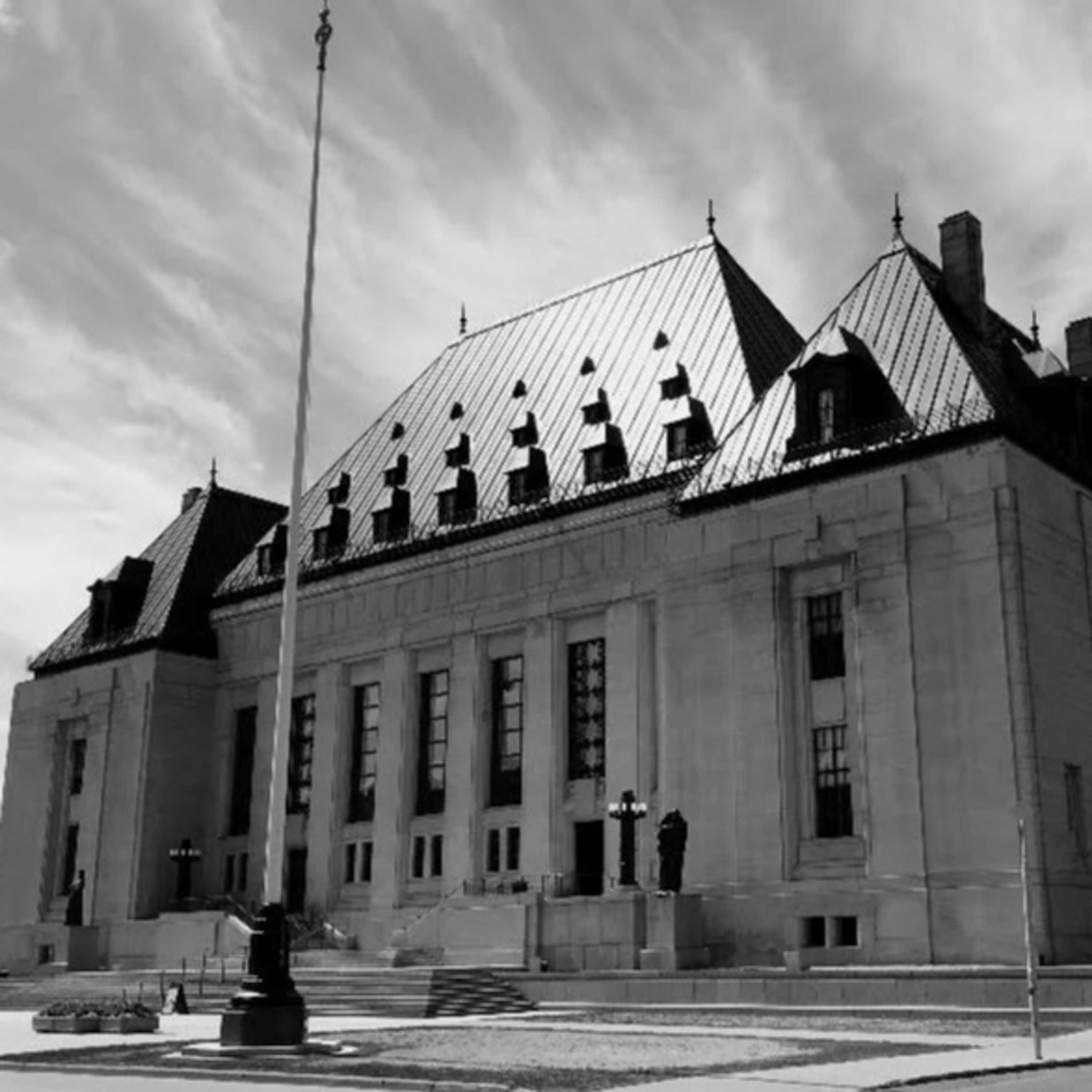
His Majesty the King v. Abdel Karim Chemlal (41766)
The respondent, Abdel Karim Chemlal, was convicted of three charges, namely possession and concealed carrying of a prohibited firearm and possession of crack. The weapon was discovered by a police officer because of an impromptu frisk search conducted while the respondent was waiting to be given a statement of offence under the Highway Safety Code, CQLR, c. C-24.2, for walking in the street and crossing at a place other than an intersection. The crack was discovered during the reception procedure at the operational centre after he was arrested for possession of a firearm. The respondent argued that the frisk search was unreasonable and that it made his arrest and the subsequent searches unlawful. He also complained about the delay between his arrest and the time at which he was given an opportunity to speak to counsel. At trial, he brought a motion for exclusion of evidence pursuant to ss. 7 to 9 and 10(a) and (b) of the Canadian Charter of Rights and Freedoms. The judge dismissed the motion. He held that the frisk search was unreasonable and that the arrest and subsequent searches were therefore unreasonable as well. He did not accept the other alleged infringements. However, applying the analytical framework from R. v. Grant, 2009 SCC 32, [2009] 2 S.C.R. 353, he declined to exclude the evidence obtained as a result of the searches. The respondent appealed the judgment of conviction. A majority of the Quebec Court of Appeal allowed the appeal, set aside the convictions and ordered that acquittals be entered. In the majority’s view, the respondent had not shown that the trial judge had made a reviewable error in finding that the right to counsel had not been infringed. With regard to the analysis of s. 24(2) of the Charter, the majority held that the trial judge had made several errors of law in analyzing the factual situation accepted by him. Bachand J.A., dissenting, would have dismissed the appeal. In his view, the trial judge had not made any reviewable error in determining that the admission of the seized evidence would not bring the administration of justice into disrepute within the meaning of s. 24(2) of the Charter. The findings of fact made by the judge, like his assessment of the three Grant factors, were not subject to any appellate intervention.
Argued Date
2026-10-06
Keywords
Charter of Rights — Protection against unreasonable search or seizure — Arbitrary detention —Standard that applies to justify safety search — Exclusion of evidence — Whether peace officer who interacts lawfully with individual is authorized to search individual for safety purposes if officer has reasonable suspicion that individual possesses weapon — Whether peace officer had reasonable suspicion allowing him to conduct safety search of respondent — If search of respondent infringed Charter, whether trial judge made reviewable error in deciding to admit evidence under s. 24(2) of Charter — Canadian Charter of Rights and Freedoms, ss. 8, 9, 24(2).
Notes
(Quebec) (Criminal) (As of Right / By Leave)
Language
English Audio
Disclaimers
This podcast is created as a public service to promote public access and awareness of the workings of Canada's highest court. It is not affiliated with or endorsed by the Court. The original version of this hearing may be found on the Supreme Court of Canada's website. The above case summary was prepared by the Office of the Registrar of the Supreme Court of Canada (Law Branch).