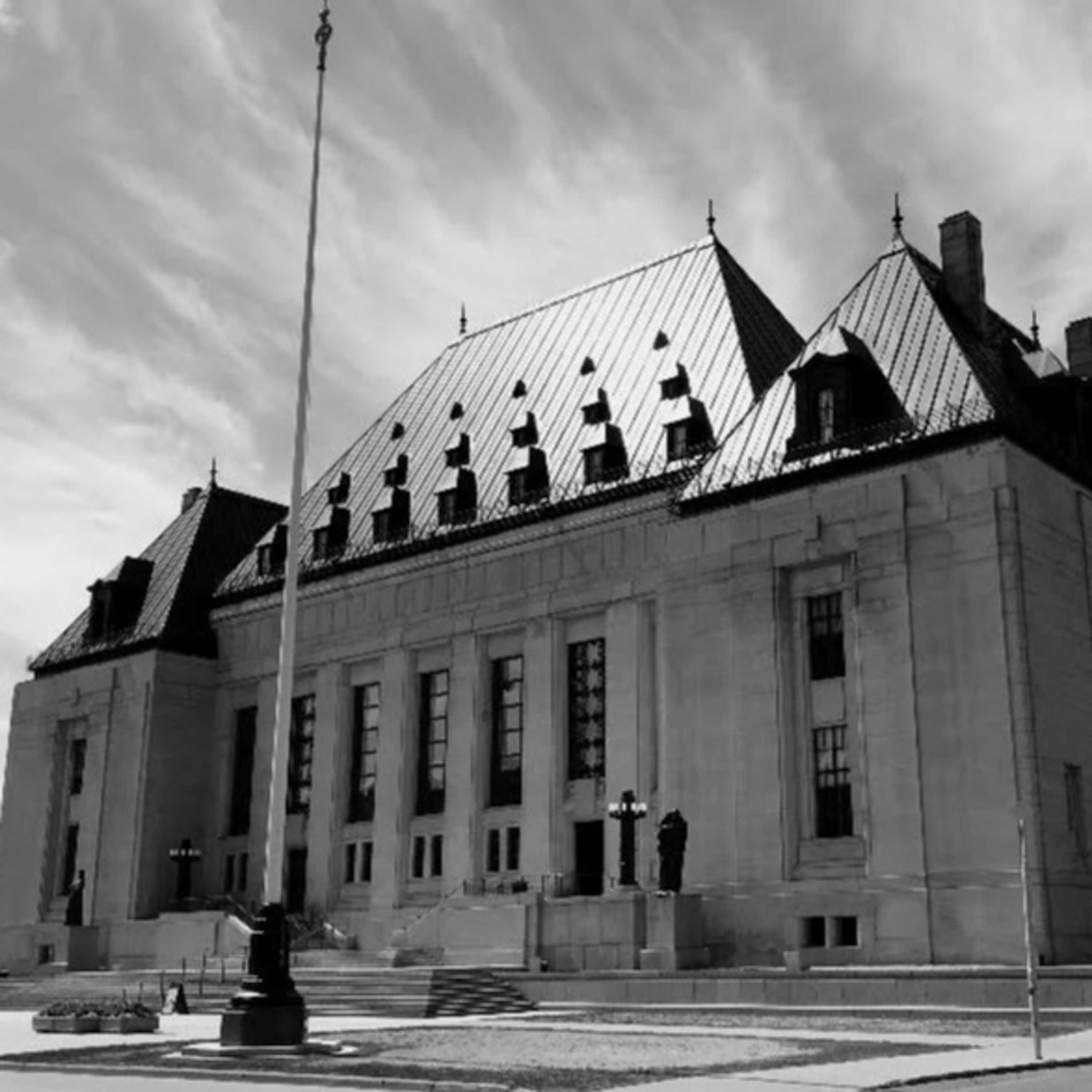
His Majesty the King v. Terrell Burke-Whittaker (41786)
On June 9, 2020, Mr. Burke-Whittaker attended a funeral for Dimarjo Jenkins, who had been shot and killed on a street in downtown Toronto on May 26, 2020. The funeral took place at a restaurant in North York. The parking lot behind the restaurant backed onto Highway 401. Late on the evening of the viewing, a vehicle driving on Highway 401 pulled onto the shoulder of the westbound lanes behind the restaurant. Someone in the car started firing shots into the crowd that had gathered in the parking lot. Many people in the parking lot ran into the building, but others stayed in the parking lot and returned fire in the direction of passing traffic on Highway 401. Still others hid behind a dumpster that was close to the door of the building. Mr. Burke-Whittaker was in the parking lot when the shooting started. He took cover behind the dumpster. He took a firearm out of his satchel and, having struggled to cock it, he came out from behind the dumpster, fired a shot toward the vehicle, and fled into the building through the parking lot door. The incident was relatively brief and captured on video. No one was killed or injured.The police investigation identified Mr. Burke-Whittaker as one of the shooters. He turned himself in on June 22, 2021, just over one year after the shooting. His firearm was never recovered. He pled guilty to one count of possession of a loaded or prohibited or restricted firearm contrary to s. 95 of the Criminal Code. He was 24 years old at the time of the shooting and has no other criminal record. He was raised by his mother and grandmother in Brampton, as his father was in and out of jail during much of his childhood. He completed high school and began college, but did not finish that course of studies. He has one child born in 2018. At the time of sentencing, he had been accepted into the Toronto Fire Academy. While on bail, he started a vending machine business. Several positive character letters submitted to the sentencing judge indicated that, as a young Black male, he had experienced systemic racism. An Enhanced Pre-Sentence Report was not submitted.The sentencing judge sentenced the respondent to a conditional sentence of two years less a day to be followed by three years’ probation. A majority of the Court of Appeal granted leave to appeal the sentence and dismissed the applicant’s appeal of the sentence. The dissenting justice would have allowed the appeal, set aside the sentence imposed by the sentencing judge, and imposed a sentence of 38 months’ incarceration less credit of 17 months.
Argued Date
2026-05-19
Keywords
Criminal law — Sentencing — Conditional sentencing orders — What principles should guide appellate courts’ review of conditional sentencing orders for offences under Criminal Code, R.S.C. 1985, c. C-46, 1, s. 95 — When, and based on what principles, appellate courts should reincarcerate offenders after otherwise successful Crown sentence appeal.
Notes
(Ontario) (Criminal) (By Leave)
Language
English Audio
Disclaimers
This podcast is created as a public service to promote public access and awareness of the workings of Canada's highest court. It is not affiliated with or endorsed by the Court. The original version of this hearing may be found on the Supreme Court of Canada's website. The above case summary was prepared by the Office of the Registrar of the Supreme Court of Canada (Law Branch).