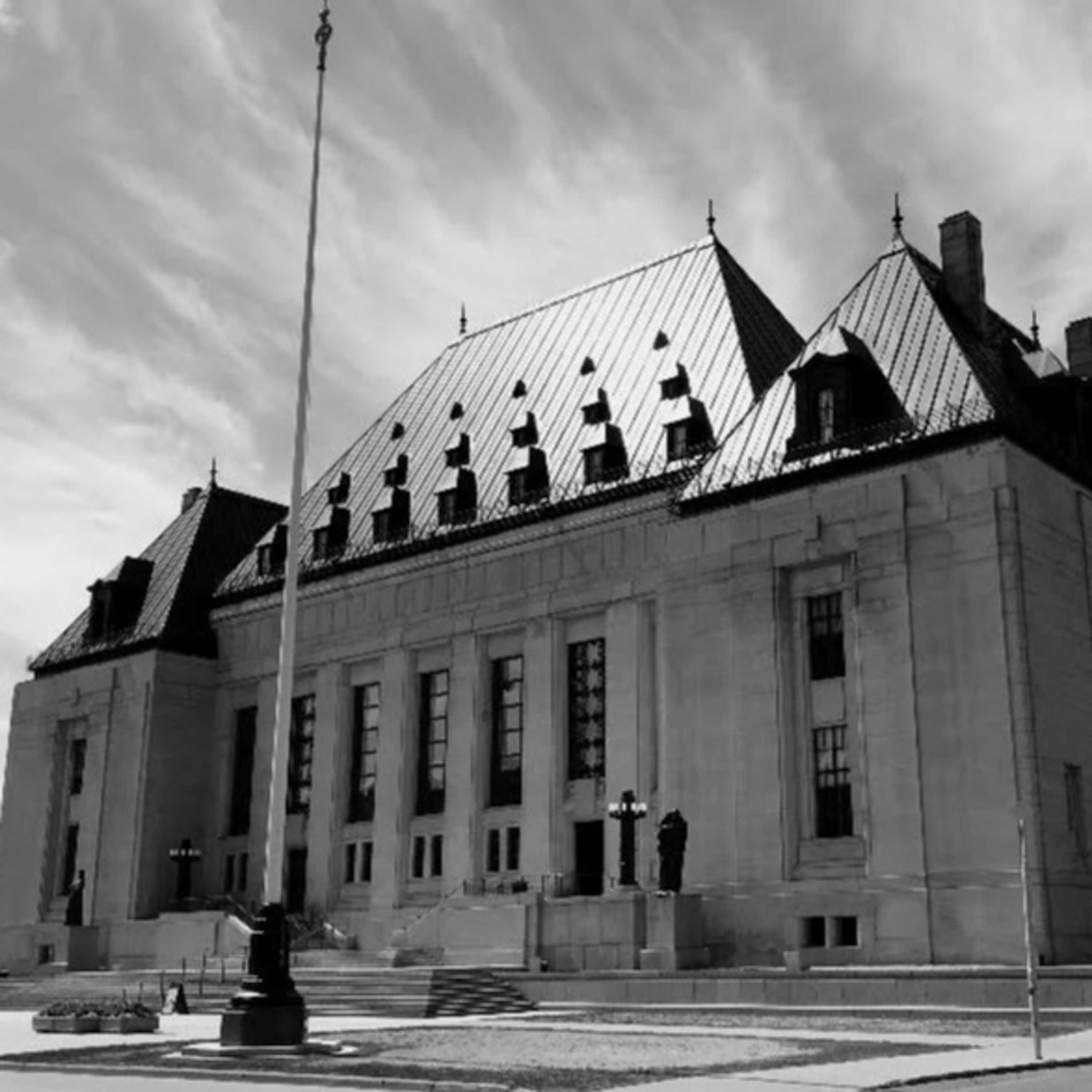
Québec Major Junior Hockey League, now doing business as Quebec Maritimes Junior Hockey League Inc., et al. v. Lukas Walter, et al. (41532)
The respondents in these applications for leave to appeal, Mr. Walter and Mr. Gobeil, were recognized as representative plaintiffs for the class covered by a class action brought against the applicants/interveners in these applications for leave to appeal, that is, the Québec Major Junior Hockey League, now doing business as the Quebec Maritimes Junior Hockey League Inc., and the impleaded hockey teams that are members of the League. In the class action, the respondents submitted that the applicants/interveners were refusing to recognize major junior hockey players as having employee status, with the result that the players had no access to the protection provided by legislation governing working conditions. Two other similar class actions were authorized, one in Ontario against the Ontario Hockey League and one in Alberta against the Western Hockey League. In total, 4,286 major junior hockey players, including 1,702 in Quebec, are covered by the class actions. On March 31, 2020, the parties to the three class actions reached a settlement agreement. The agreement was submitted to the superior courts in each of the three provinces through a joint hearing. The superior courts rejected the agreement in October 2020 solely on the basis that the scope of the release provided for was overly broad. In June 2023, after the releases were renegotiated, all of the parties, including the respondents, signed an amendment to the initial settlement agreement in order to replace the release provisions. However, it appears that, shortly after the signing, the respondents disavowed their signature and announced that they would oppose the submission of the amended agreement for judicial approval. Despite the instructions given by the respondents, Mr. Savonitto, a member of one of the firms that are applicants/interveners in these applications for leave to appeal, nevertheless submitted the amended settlement agreement to the Superior Court judge for her approval. In response, the respondents filed notices with the Superior Court formally revoking the mandate of the law firms that are applicants/interveners in this case and announced that they were retaining the services of other lawyers. The applicant/intervener law firms opposed the notices of revocation and asked the Superior Court to determine the conditions for approving the amended settlement agreement. The Superior Court recorded the revocation of the mandate of the applicants/interveners as far as the respondents were concerned, but it confirmed that the applicants/interveners still continued to represent the members of the class covered by the class action. The Court of Appeal allowed the appeal and set aside the Superior Court’s decision.
Argued Date
2026-02-16
Keywords
Civil procedure – Class action – Lawyer client relationship in context of class action –Lawyer’s ethical obligations to client in context of class action – Protection for class members – Revocation of legal mandates given to firms by class representatives – Whether Court of Appeal erred in law in ordering that agreement to settle authorized class action be submitted to court by applicants/defendants for approval, thereby placing their lawyers in conflict of interest and in situation that compromised their ethical obligations – Whether Court of Appeal erred in ruling that lawyer who acts for plaintiffs in class action: (i) has lawyer client relationship only with class representative; (ii) does not represent class members; and (iii) has no duty to act in best interests of class where those interests conflict with instructions of class representative – Whether Court of Appeal erred in breaching its own duty to protect interests of absent members, especially where those interests conflict with interests of class representatives – Whether Court of Appeal erred in law in holding that art. 2633 of Civil Code of Québec and art. 528 of Code of Civil Procedure concerning homologation of transaction under ordinary law apply to process for approval of transaction in class action, and thus in asking defendants to submit amended settlement agreement for approval if Mr. Gobeil and Mr. Walter refused to do so – Code of Civil Procedure, CQLR, c. C 25.01, arts. 87, 528, 571, 575, 586, 589 and 590 – Code of Professional Conduct of Lawyers, CQLR, c. B 1, r. 3.1, ss. 20, 23, 71, 72 and 120.
Notes
(Quebec) (Civil) (By Leave)
Language
English Audio
Disclaimers
This podcast is created as a public service to promote public access and awareness of the workings of Canada's highest court. It is not affiliated with or endorsed by the Court. The original version of this hearing may be found on the Supreme Court of Canada's website. The above case summary was prepared by the Office of the Registrar of the Supreme Court of Canada (Law Branch).